Showing posts with label Science. Show all posts

Wednesday, September 9, 2015

Preschool Science: Water

For this preschool lab, we tackled water. Well, not literally; that would be difficult. But we did spend the better part of an hour exploring different aspects of water (which, frankly, is fascinating. It's all around us yet defies most rules of physics). I was inspired by this and this.

I started out by reading Heather Fell in the Water by Doug MacLeod and Craig Smith.


Then we did a floating egg experiment, which not only allowed us to talk about "sink" and "float", but also set them up to experiment on their own when we went to the stations. 

I got the idea from here, though I simplified it to just be about an egg (click the link for other fun ideas!). We tried an egg in fresh water and then added salt bit by bit until the egg floated. While I poured and mixed, we talked about density and how much salt it might take to make the egg float. 

Once we got the egg to float, it was off to the stations!

Stations: 

To prep the stations, I put plastic tablecloths over each table and then layered a beach towel (from home) on top of that. (Hence the colorful pictures...). This kept the mess - or, in this case, the wetness - from going everywhere. Just remember to bring a bag to hold all the wet towels you'll be taking home to wash. 

1 - Swimming Raisins


Unfortunately for our first station, this one was a bust. Supposedly, a raisin will sink in regular water, but will rise and fall with the bubbles in sparkling water. We tried it a few different ways, but this one never quite took off. I'm gonna go with: it's the "learning about the scientific method" station...

2 - The Volume of Water


I put out a dozen plastic containers of different sizes and heights and capacities and asked the children to pour the water from one container to another. Even though the shape of the water changed, the volume remained the same. Also, pouring water is fun.

3 - Water Absorption


One of my co-workers donated a bunch of Talenti gelato containers and they are awesome! (Both the jars and the co-worker). I've used them for all sorts of things, but this time I put out sponges in different sizes and asked the children to put a sponge and a little water into a container, seal the container, and see if their sponge could absorb the water as they shook the container. 

4 - Sink or Float


This station was the most fascinating to the kids. I had bowls of water, a worksheet, and a ton of objects for the children to test. I also put out salt in case they wanted to try to make something float. This station got the best conversations between caregivers and children as they tried to guess what would happen and then tested it out. Also, as you probably already know, dropping things in water is fun.

5 - Water-resist Painting


I pulled out my white crayons for this one. The kids drew something with the white crayon on white paper and then painted over it in watercolor paint. Above, you can see the fish emerging through the paint. A lot of kids really liked this one, though they sometimes had their parents draw the first part because the white on white was too complex.

This was one of my favorite labs - simple concepts but all fun to play with (except the raisins) and minimal mess. I'll be repeating this one.

Monday, May 11, 2015

Preschool Science: Extreme Weather


This week for Preschool Explorers we tackled Extreme Weather. 

I started by reading When a Storm Comes up: a Rookie Read-aloud. 


This book turned out to be perfect because it was just the right level and length and it hit on every major type of storm, as did the stations I had set up. Only problem was the trim size, but I had a small group and everyone got to see the pictures. 

Stations: 

Station #1: Tornadoes!
Based on this link, we made tornadoes in a jar. I put out empty gelato containers, a bowl of water, and a bottle of dish soap. The kids added water to the containers, squirted in some dish soap, closed the container and shook it. Voila! Tornado in a jar. This particular experiment worked even better after the jars had been sitting for a while, so kids came back to this one a couple times. 


Station #2: Thunderstorms!
This station had three parts. 

First: the clouds. I brought bars of Ivory soap (it HAS to be Ivory soap, don't try it with anything else!) and cut them in fourths. The kids put down a piece of waxed paper in the microwave and microwaved the soap chunks for 30 seconds. Instant clouds. For more information and awesome pictures, check this out. Extra bonus: the kids love the buttons on the microwave. 


Part two: Rain in a jar. I put out some more empty gelato containers, some watercolor paint, a can of shaving cream and some water. The kids put water in their jar and then added a shaving cream cloud. Using the droppers, they put watercolor into the cloud until they could see it "raining" underneath.


The eyedroppers are everyone's favorite thing, so they barely watched it rain before adding more and more color, but the idea was fun. For a great picture of the actual jar thunderstorm, look here. (I chose not to use the paperclips).


Part three: Lightning. The idea is simple: blow up a balloon, rub it on your head, go to a dark room and touch the balloon with a spoon. You should be able to see the static electricity, which is what lightning is (on a much bigger scale, of course). This station was most unfortunately a dud. We used the supply closet (which the kids always want to go into anyway) and we managed to hear the spark, but never actually saw it. Despite this, everyone enjoyed rubbing the balloon on their head and then having it stick to them. So we had that going for us. I got the idea from here.

Station #3: Hurricanes!
I challenged the kids to build a house that would withstand hurricane-force winds. They had blocks, sponges, cotton balls, playdough, and popsicle sticks. When they had built something, they turned on the fan to see if it would blow over. Some of the kids used the playdough to stabilize the blocks, which I thought was a genius idea. (And, thank god, they cleaned it up before they left so I could still think it was a genius idea).

Station #4: Floods
I put out small trays, rocks, sugar cubes, and small toys. The challenge was to put sugar cubes and a rock in the tray, then put a small toy on top of each. When water was poured in, which toy got wet first? 

Of course I expected the sugar to dissolve first (which it eventually did), but it took too long to really appreciate. The kids ended up playing with the toys and knocking them in to the water and crushing the sugar cubes with the toys. Since no mess was made, I figured why not? They are still exploring dissolving and flood waters rising, so more power to them. 

This particular theme was very well received. Many participants did the stations more than once and while some themes have them leaving within 20 minutes. I actually had some stay almost an hour to explore. 

Wednesday, December 3, 2014

Preschool Science: Measuring

Today in Preschool Lab we tackled measuring. I was going to do both weights and measures, but I forgot my kitchen scale at home (and may have said some choice words when I discovered that....) so I decided to simply go with measuring with inches and cups. We can do weights another time.

(Side note: I did have a bathroom scale available to me because my library has one, but it wasn't sensitive enough to weigh a book, so it wasn't going to work for this program. And while we did measure how tall we were - see below - I thought it probably wouldn't go over as well to have people weigh themselves...)

I started off by talking about how big and small things can be compared by measuring them. Then I pulled out a ruler and had the kids identify it and tell me what it was for.

Time for a book! I used one of my all time favorites: Actual Size by Steve Jenkins.


It was a perfect book because 1) it's awesome and 2)we could use the ruler to measure things in their actual size as well. That page that has the shark teeth? It says that a shark's teeth are four inches long, so we measured them with the ruler and by gum (is that a pun?), they were!

We also measured the tiny lemur monkey and the gorilla's hand which led to  measuring all our hands and feet. (Mine were the biggest. Who knew?)

Then it was station time! The stations broke down into two kinds: the ones that measured with rulers and the ones that measured with cups and spoons.

Stations: 

I borrowed the measuring stations from Storytime Katie (Thank you for your brilliant ideas!). I put out stuffed animals and had the kids measure how tall and how long they were. I also had a worksheet that they could fill out if they chose.


The one problem with this station is that the kids wanted to take the stuffed animals home! 

The second measuring station was about measuring how tall each kid was. I put the heights of various animals up on the wall. I tried to find animals that went from very short (a fox) to very tall (a horse) with lots of variety in the middle so kids could find where they fit in to the lineup. 

They stood up agains the wall (ideally between an animal that was shorter than they were and an animal that was taller than they were) and we put a piece of tape on the wall right by their head. Then we measured how tall that piece of tape was and put a name tag with their name and height right by the tape. Here's the wall with just the animals: 


And a close-up of the wall with some of the kids' name tags.


The last ruler/inches measuring station was a stand-up rainbow. The kids were given strips of construction paper to measure and cut along with the measurements of each color (each color was an inch shorter than its predecessor as you move through the colors of the rainbow). They cut each color then lined up the edges and stapled them to create a standing rainbow.


One of the moms accidentally used the centimeter side of the ruler which is why you see a tiny rainbow there, too. It worked surprisingly well.

For the cup/spoon measuring, we did had two different stations.

First, I put out containers with rice and a bunch of measuring cups and spoons. The "instructions" just encouraged the kids to explore scooping and dumping. I also added some leading questions to the sheet (Do three 1/3 cups really make a cup? How many teaspoons in a 1/4 cup?), but I mostly just let them play. Besides, it feels ridiculously awesome to sink your fingers into a container of rice like that. So there's that, too.


Finally, we used measuring cups to make playdough. Everyone made their own batch using a half cup, a quarter cup and a tablespoon.

This is the recipe I use:
In a bowl, mix 1/2 cup flour with 1/4 cup salt.
In a separate container, mix 1/4 cup water with 1 tablespoon of vegetable oil.
Combine and stir carefully till dough forms.
Dump the dough onto the table and finish kneading it with your hands. If it's too dry, add more water. If it's too sticky, add flour.


 The oil gives is a really smooth texture and the kids enjoyed making the dough, playing with it, and taking it home (I offered plastic ziploc bags so they could take it with them).

All in all, I was pleased with this particular lab. The group stayed much longer than usual (60 minutes instead of the usual 45) and seemed to really enjoy each station.

Wednesday, October 29, 2014

Hands-on Science: Spaghetti and Marshmallow towers

I'm trying a new program this fall: Hands-on Science for the after-school crowd. Our first session was about building and engineering. 

The kids tend to float in during the hour of the program, so I don't do anything super-organized at the beginning of the program. Instead, I make sure the supplies are ready on the tables and I give the kids an idea of what the goal is. This little speech is easy to repeat as more kids come in. 

In this case, I had mini marshmallows and three kinds of pasta available on the tables and I encouraged the kids to build: 
  • something very tall OR
  • something very big OR
  • something that could hold our little Angry Birds pig (they loved that he sat on the structures like he does in the game). 
I put out three different types of pasta to add to our experimenting skills: which one would be the strongest? I admit I had a bit of a ringer because I chose spaghetti, whole wheat spaghetti, and linguine (the ringer; it's much thicker and sturdier than spaghetti). I was curious about how the whole wheat pasta would work (would whole wheat make it stronger?), but it was "brutally brittle" according to one of the moms helping her five year old son. 

Some kids just built awesome things (the first two options) but some were really interested in getting that pig to stay on their tower. I circled the room, asking questions (what could you do to make it stronger?), exclaiming over clever designs, and offering assistance as needed (some kids had parents with them, some were solo). 

By the end of the program, three kids had made things that managed to hold our little pig. They were very proud of themselves. 


I liked the self-guided exploratory nature of the program, which works well for my crowd of kids who come with parents, kids who come on their own, kids who need to leave early, and kids who may arrive late. 

Honestly, the hardest part was convincing the kids that they shouldn't eat the marshmallows. (I gave out handfuls as the kids left - the ones on the tables were no longer edible by the end!)

Monday, October 20, 2014

Preschool Science: The Five Senses

I was on maternity leave all summer, so I missed our lovely science themed summer reading program. I was feeling a bit bummed about that, but why be bummed when you can be awesome? (thanks to Barney Stinson for the paraphrase). I decided to make STEAM programs part of the fall roster. Inspired by all the STEAM programming I see online and the ideas in the summer reading manual, I've decided to do a weekly preschool science program.

This week: The Five Senses.

We started off talking about the five senses and which body parts we use for each.

Then I read Rain by Manya Stojic, where different animals use their senses to foretell the coming rain.


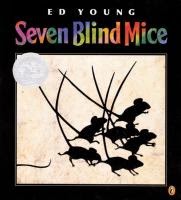
I have a felt board set that I made for "Seven Blind Mice and the Elephant" so I retold that story, emphasizing the mice using their senses to guess what the elephant was. The kids were really into the story and were super excited to see the elephant appear.


After that, I gave a brief introduction to the stations and set the kids and their parents loose to explore.

The stations:

Smell: A coworker donated some empty gelato containers and I put three cotton balls in each and doused them in extracts from the grocery store. I found: raspberry, banana, coffee, orange, peppermint, vanilla, and coconut. The goal: identify the smells by opening the containers and giving them a whiff.

I made the set the day before and this morning the smells were strong and identifiable. Fair warning, though, the banana one was horrible. If you knew it was banana, you could maybe figure it out, but it smelled like synthetic banana and made everyone wrinkle their nose.


Touch: I put a variety of objects (a stuffed animal, a rubber duck, some seashells, etc.) in wipes containers and challenged the children to identify each object by feel alone. The wipes boxes were great for this because they have a small rubber section that the kids can stick their hands through without having to open the box.


Touch: Crayon rubbings. I used leaves, of course, and also cut out a set of alphabet letters which showed up really well. I encouraged the kids to cut out their rubbings, glue them to index cards and make "books" using shower rings. The hope is to continue to have a this station (with a different theme, of course) each week so the kids can add new and different pages to their books.


Taste: I found three bottles of juice that were shaped exactly alike and *bonus!* three juices that looked pretty much the same. I put the flavors on the instruction sign and the challenge was to figure out which juice was which by taste alone. This was a favorite station; one of the boys said "Can we have juice next week?" I have leftovers, so maybe...


Sound: Each of these cans had a partner: two of them had popsicle sticks, two had buttons, two had sand, two hand pom poms, etc. The challenge was to find the pairs by the sound alone. I also threw in a wild card: a jar without a partner. This jar had stickers in it, and once you found it you could take a sticker. 

This was my personal favorite station, but it turned out to be a bit too hard for my preschoolers. They were good sports, but it was definitely very difficult (there was a lot of flipping the cans over to read what was in each one). 


Sight: I put several objects in empty bottles and filled the extra space with rice. The challenge was to find specific objects in the rice. This one was ok - one of the boys loved the noise that the bottles made when he shook them so he spent most of his time doing that.


Thanks to Abby the Librarian and Story Time Katie for the great ideas!
Related Posts Plugin for WordPress, Blogger...